The four pages that rank for this question give four different answers, and two of them recommend mutually exclusive halves of the year. One says come in May. Another says come in December. Neither mentions that the water is 20 degrees colder in one of those.
The short answer
For weather and whales, mid-December to April. For warm water, empty beaches and the best fishing of the year, late September to mid-October. For a balance of both, late October and November. The honest answer depends entirely on whether you plan to get in the water, and that is the question none of the popular guides asks.
We book charters out of this marina, so our view of the Cabo calendar is the one from the water rather than the pool deck. Every figure below is sourced, and where the sources disagree we show you both.
Why every guide tells you something different
This is not a case of some pages being wrong. It is four pages silently optimising for four different things and none of them telling you which.
| The page | What it says is best | What it is actually optimising for |
|---|---|---|
| US News | May to June | Price and crowds. It calls December to April “wintertime crowds”. |
| Cabo Visitor, 7,500 words | May, June, October and November | Value. The broadest answer of the four. |
| Royal Caribbean | December to April | Air temperature and whales |
| Pacaso | December through April | Air temperature and dry weather |
So the split is two against two, and both camps are defensible. The December camp is optimising for air temperature and whale watching. The May camp is optimising for price and crowds. Neither discloses the trade.
Worth noticing: the page that owns this query sits on one of the biggest travel domains on the internet and its entire recommendation is a single paragraph of about 200 words with no month-by-month section at all. The longest of the four runs 7,500 words, has a dedicated water sports section, and never once mentions the wind that defines Cabo’s winter. We will get to that.
The year, with the numbers nobody publishes
Los Cabos measures itself every month. Arrivals come from immigration records, occupancy and room rates from the hotel association, both compiled by the destination’s own tourism trust. Almost nobody writing on this subject opens those files.
| Month | US arrivals, 2025 | Hotel occupancy | Average room rate | Sea temperature | The wind |
|---|---|---|---|---|---|
| January | 164,630 | About 74 percent | Part of a $545 Q1 average | Cool, around 73F | El Norte building |
| February | 166,899 | High season | Peak block | Coldest, 64 to 72F | Statistically the windiest month |
| March | 229,311, the peak | 84 percent, a record | $498 | Still cool | Strong Nortes, 30+ knots possible |
| April | 178,579 | Easing | Falling | Warming | El Norte tailing off |
| May | 164,319 | Shoulder | Falling | Comfortable | Calm half begins |
| June | 190,901 | Shoulder | Falling | Warm | Calmest winds of the year |
| July | 182,391 | 74 percent | $389 | Warm | Calm |
| August | 120,247 | 59 percent | $352 | Warmest, 82 to 84F | Calm, but swell events |
| September | 85,455, the floor | About 47 percent | About $342 | Warmest, bath temperature | Hurricane season peak |
| October | 151,159 | Climbing | Climbing after the 12th | Still warm | Calm. Four tournaments in three weeks. |
| November | 166,977 in 2024 | 74 percent | $444 | 81F | El Norte returns |
| December | 190,692 in 2024 | 75 percent, over 90 at New Year | Peak | Cooling | Nortes established |
Three things fall straight out of that table.
March gets 2.7 times as many American visitors as September. 229,311 against 85,455. Occupancy in March 2025 hit 84 percent, which the tourism observatory notes was the highest it had recorded since it started measuring in 2019.
The room rate swings about 200 dollars a night. March ran 498 dollars, September about 342, against a January to March average of 545. At the luxury end the discount is steeper: five-star properties that normally ask over a thousand a night cut 30 to 40 percent in the September window.
And the number that recalibrates the whole “Cabo is expensive” story: in November 2025 the average room rate in Cabo San Lucas town was 284 dollars, while the Scenic Route corridor ran 612. More than double. The widely quoted five-hundred-dollar Cabo is a Corredor number, not a town number.
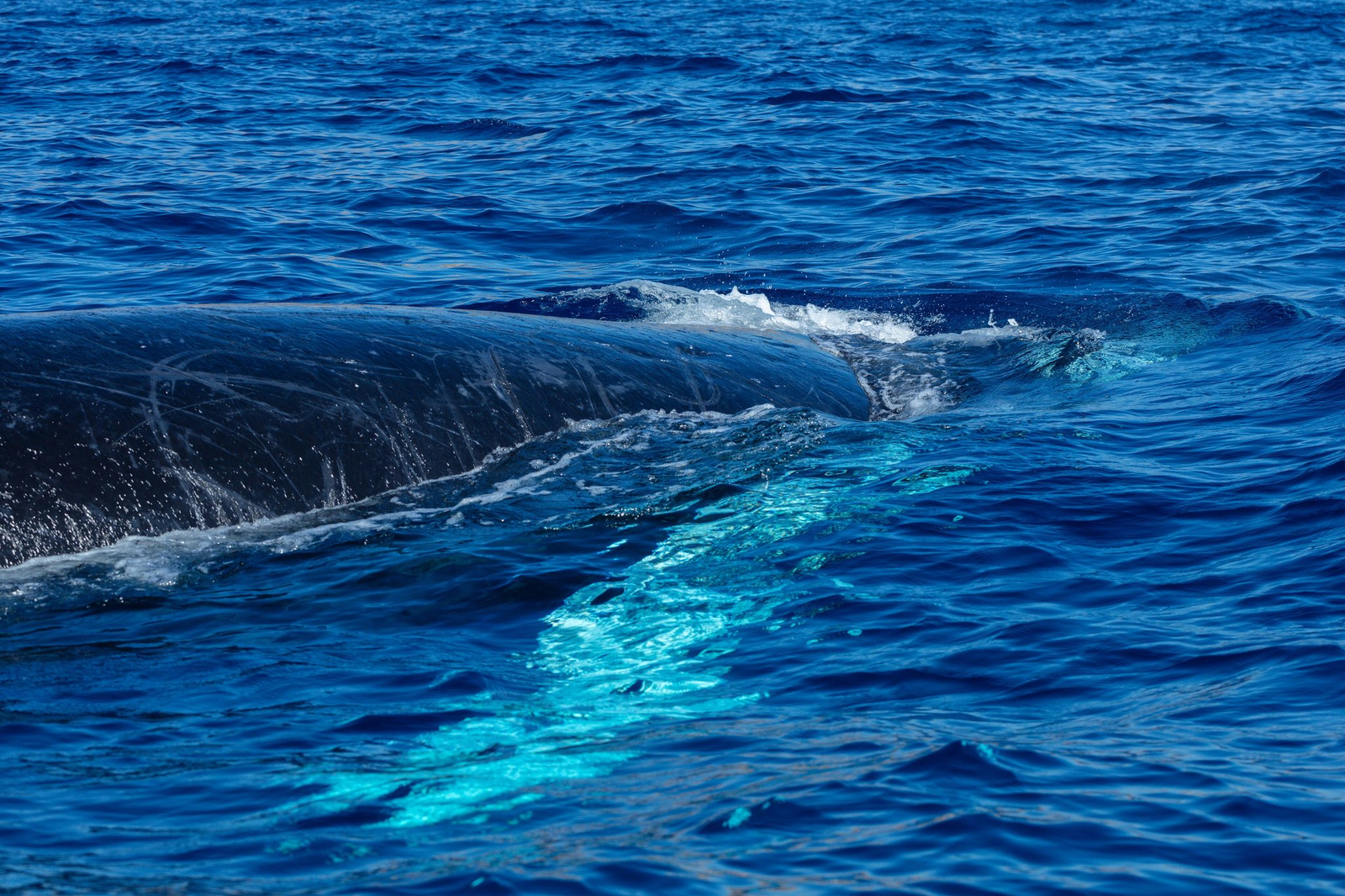
El Norte, the wind nobody writes about
The longest competing article on this subject runs 7,500 words, includes a section on water sports, and does not mention El Norte once. For anyone planning to be on a boat, it is the most important thing in the Cabo calendar.
From November through April, a thermal wind blows down the Sea of Cortez. November to March it runs 18 to 30 knots, and from January through March it can reach gale force past 30, blowing for two to four days at a time with calm spells in between.
The reason it is so strong is geography rather than latitude. Baja’s mountain spine and a subtropical low to the south funnel the wind down a 700-mile fetch of the Sea of Cortez and deliver it to the East Cape. The forecasters who study it describe the result as turning a mirror-calm sea into a heaving mass of big swell. Cabo is not windy. Cabo sits at the open end of a 700-mile funnel.
February is statistically the windiest month, which is also peak season, also when the water is coldest, and also when four out of four guides either recommend it or do not warn you about it.
Here is the distinction that actually matters, and nobody makes it. On a normal winter day the wind follows a daily cycle: calm at dawn, building by ten, fully developed 15 to 25 knots by one in the afternoon. So yes, book the early departure, and in February the genuinely flat window narrows to roughly half past six until nine in the morning.
But during a full multi-day El Norte event, that daily cycle does not apply. The wind blows through the night and through the morning, and that is when trips get cancelled. “Mornings are calmer” is true of the ordinary day and false of the day that actually ruins your plan.
What really cancels a boat day, and it is not what you think
Here is the single most useful fact we found, and it cuts against the obvious story.
On 18 August 2026 at 7:45 in the morning, the Capitania de Puerto closed Cabo San Lucas to all vessels under 500 gross tons. The conditions? East-northeast winds of 15 knots gusting to 20, with waves running three to five feet, after gusts hit 70 kilometres an hour overnight. Beaches went red right along the coast.
Fifteen knots. In August. That is a fraction of a February El Norte, in the month everyone files under calm.
The lesson is that the thing that cancels your boat day is a swell event, not an average monthly wind speed. Pacific storm activity in late summer and autumn closes the port just as readily as winter wind does, and hurricanes and tropical storms close it outright. There is no month on the Cabo calendar with a zero in this column.
What we can tell you honestly: nobody publishes port closure statistics by month, so anyone giving you a number for how often February closes is making it up. What we do is watch the forecast for your dates, book the morning slot in the windy season, and tell you plainly when the boat that suits your group is a small one on a week that does not favour small ones.
The window nobody recommends, and we think they are wrong
Roughly 25 September to 11 October. None of the four ranking pages names it. We think it is the most underrated fortnight in the Mexican calendar, and here is the case.
The water is at its warmest of the entire year, mid-eighties and bath-warm, with excellent visibility. Compare that with February, the month two of the four guides recommend, when the Pacific side drops to 64 to 68F. If you actually intend to get in the sea rather than look at it, those two months are not close.
You get the place to yourself. September occupancy ran about 47 percent in 2025, projected at 45 for 2026, which the hotel association itself calls the annual low. Their executive president put the local benchmark memorably: “We reached 56 percent in August; when we exceed 50 percent occupancy, we’re talking about positive numbers.” That is how soft the shoulder is.
It is the cheapest time of year, roughly 37 percent off the first-quarter average room rate.
And it is the best fishing of the year, by operator consensus. By October you get a rare overlap with striped marlin, blue marlin, black marlin, wahoo, yellowfin tuna and dorado all in the water at once. The phrase that comes up again and again on the charter calendars is that if you can only come once, come in October. The proof is not an opinion: four major tournaments, including the richest marlin tournament in the world, run inside three weeks in late October. Nobody schedules that in the off-season by accident.
The hard deadline is 12 October, when tournament season begins and both prices and boat availability turn. Which is precisely why the window is the two weeks before it.
| Window | The water | The price | The catch | Verdict for a boat day |
|---|---|---|---|---|
| 25 September to 11 October | Warmest of the year, mid-80s | The annual floor | Rain, hurricane season, half the good restaurants shut | The best value fortnight in the country |
| Late October to November | Still 81F | Climbing after the 12th | Tournaments price the boats up | The best all-round compromise |
| Mid-December to April | Coldest, 64 to 72F | The annual peak | El Norte, and March is a zoo | Perfect for whales, wrong for swimming |
| May and June | Warming nicely | Shoulder | Nothing much | June has the calmest winds of the year |
| July and August | Warm | Falling | Humid, and swell events close the port | Quiet and underrated |
| 21 to 28 March 2027 | Cold | Peak | Semana Santa stacked on spring break | Avoid |
The honest cost of going in September
We are not going to sell you the cheap month without the invoice.
September is the peak of the eastern Pacific hurricane season, and in 2026 the ports closed for Tropical Storm Marie in September and Hurricane Rachel in October. Eleven Cabo hotels were certified as temporary safe shelters for the season. The rainy season runs roughly from late July into early October, and while Cabo’s annual rainfall is a tenth of Cancun‘s, almost all of it falls in these few weeks.
And things close. This is the part nobody tells you. The Office on the Beach, the most famous restaurant on Medano, shuts every single year for a stretch of September, and Edith’s closes alongside it. The Waldorf Astoria Pedregal publishes a formal Annual Maintenance Period page on its own website, which is a five-star hotel telling you in advance that it turns off. The San Jose del Cabo art walk does not run at all between July and October. The airport schedules fewer flights.
The local framing on this is generous and we think it is right: a restaurant that closes every September for deep maintenance and gives its whole staff a holiday before the winter season is a well-run business, not a struggling one. But if your heart is set on a specific dinner reservation, check it exists that week.
The dates to avoid, including one specific 2027 trap
All of March, and the second and third weeks worst of all. Spring break fills the town, March 2026 was projected at 80 percent occupancy with twelve major resorts completely sold out, and the crowd concentrates on Medano beach, which is exactly where the water taxis and beach launches go from. March afternoons on that sand are the worst-case scenario for a relaxed charter departure.
21 to 28 March 2027. Semana Santa falls early that year and lands directly on top of the peak spring break fortnight. In 2026 the two waves were sequential, spring break through March and Semana Santa from 29 March. In 2027 they stack. Mexican domestic holiday demand and American college demand in the same week, in the same town.
Christmas and New Year. Hotel leaders project about 75 percent for November and December with Thanksgiving and New Year pushing many resorts past 90. New Year week runs 26 December to 4 January, and villas with a view are typically booked nine to twelve months ahead.
What we see when people book
Four patterns, every year.
People book February for the weather and then ask why the snorkelling was cold. February is the windiest month and the coldest water of the year. It is a magnificent month to sit on a terrace and watch whales. It is the wrong month to plan a day of swimming off the boat.
People book the afternoon departure in winter. The wind builds by ten and is fully developed by one. In the Norte season the morning slot is not a preference, it is the difference between a good day and a wet, loud one.
People avoid September entirely on reputation. Warmest water, emptiest town, cheapest rooms, best fishing. Yes, it rains, and yes, your favourite restaurant may be shut. It is still the best value fortnight in the country.
People book the flight early and the room late. That is backwards in Cabo. The villa and resort market rewards booking far ahead, especially for the holidays. Airfare data points the other way, and in any case the cheapest month to fly depends far more on which US airport you leave from than on which month you pick. Anyone quoting a single cheapest month to fly to Cabo is quoting their own dataset’s mix of origin cities.
One last thing, and it is the most Cabo thing on the calendar
From 31 October to 2 November, Cabo San Lucas celebrates Day of the Dead on the water. They call it Altares en el Mar, altars at the sea: decorated boats and a parade through the marina, altars through the town, finishing with traditional food and mezcal at Plaza Amelia Wilkes on 2 November.
It is the single most on-brand event in the Cabo year for anyone who came here for the boats, it falls at the tail of the cheap season just before rates climb, and not one of the four guides ranking for this question mentions it.
Common questions
What is the best month to visit Cabo San Lucas?
For whales and dry, mild weather, February or March. For warm water, low prices and the best fishing, late September into October. November is the best compromise: the water is still 81F, the crowds have not arrived and El Norte has only just started.
When is the cheapest time to go to Cabo?
September. The average room rate falls to around 342 dollars against a January to March average of 545, hotel occupancy bottoms out near 47 percent, and five-star properties cut 30 to 40 percent.
What is the worst time to visit Cabo?
March, for crowds and prices, with the second and third weeks worst. In 2027 specifically, avoid 21 to 28 March, when Semana Santa collides with the peak spring break fortnight.
When is the water warmest in Cabo?
August and September, in the low to mid eighties Fahrenheit. The coldest is February, when the Pacific side can drop to 64 to 68F, which is the same month most guides recommend for a beach holiday.
When can you see whales in Cabo San Lucas?
The federal season runs 15 December to 30 April, with January and February the heaviest concentration. Most operators advertise a 15 April finish, two weeks before the published notice.
What are El Norte winds and when do they blow?
A thermal wind that funnels down the Sea of Cortez from November through April, running 18 to 30 knots and reaching gale force from January to March. Mornings are usually calmer, but during a multi-day event the wind blows through the morning too.
Tell us your dates and we will tell you the truth about them
Send the week you are thinking about, even a rough one. We will tell you what the sea is likely to be doing, whether it falls in the Norte season, whether the restaurant you were told about is open, and which departure slot gives you the best shot at flat water.
And if your dates would be better spent on the other coast, we book that one too and we will say so.


