Short version: the thing most likely to hurt you in Cabo is not a criminal. It is the ocean, and after that the road. Cabo San Lucas records about as many homicides per head as Boston. In June 2025 it lost two American visitors to the sea in under three days, and one of them was not even swimming.
The short answer
Yes, Cabo San Lucas is a reasonable place to travel. The US State Department puts Baja California Sur at Level 2, exercise increased caution, the same level as France, and places no restrictions on its own employees travelling there. The municipality’s homicide rate is roughly 4 per 100,000, against 18.1 for Mexico as a whole.
The honest caveat is that this is not the same as nothing to worry about, and the worries are not the ones you arrived with. We book boats here, so we spend our weeks watching the sea state and the beach flags rather than the crime news, and that turns out to be the correct thing to watch.
What the official advisory actually says
Most articles tell you Cabo is Level 2 and stop. Here is the full entry for the state, word for word, from the US State Department’s Mexico advisory:
“State of Baja California Sur. Exercise increased caution due to terrorism and crime. There is a risk of violence in the state from terrorist groups, cartels, gangs and criminal organizations. There are no specific restrictions on travel for U.S. government employees in Baja California Sur state.”
That last sentence is the one that carries information. The State Department restricts where its own staff may go in several Mexican states. In Baja California Sur it does not.
And here is the comparison nobody runs. Quintana Roo, which is Cancun, Tulum and Cozumel, sits at the same Level 2. But the advisory adds four sentences to that state’s entry that it does not write for Cabo’s: that shootings between rival gangs have injured and killed innocent bystanders, that US citizens have been victims of both non-violent and violent crimes in tourist and non-tourist areas, to pay attention to your surroundings after dark, and to remain in well-lit pedestrian streets and tourist zones.
Same level, different text. If you are weighing Cabo against Cancun, that difference is worth more than the number they share.
The crime numbers, with something to compare them to
Level 2 means nothing to a reader without a reference point. Here is one. These are homicides per 100,000 people over the twelve months to August 2026, calculated from Mexican federal crime data against population estimates, with the US city each one lands next to.
| Mexican destination | Homicides per 100,000 | Cases in the year | About the same as |
|---|---|---|---|
| Cozumel | 2.1 | 2 | Safer than Boston |
| Los Cabos | 4.0 | 17 | Boston, at 3.8 |
| La Paz | 5.6 | 18 | New York City, at 5.8 |
| Playa del Carmen | 6.0 | 25 | New York City |
| Cancun | 6.9 | 72 | Los Angeles |
| Puerto Vallarta | 8.3 | 26 | More dangerous than Los Angeles |
| Mazatlan | 26.7 | 140 | Atlanta |
| Tulum | 29.8 | 17 | Detroit |
| Acapulco | 42.5 | 335 | More dangerous than Memphis |
| Mexico, nationally | 18.1 | – | Three times the US national rate |
On that measure Los Cabos is the safest major Mexican beach destination except Cozumel, and it is statistically indistinguishable from Boston. It is also, for what it is worth, a municipality that receives several million visitors a year and records seventeen homicides.
The part the other articles leave out
Every page that ranks for this question tells a single smooth story: Cabo is safe, relax. The honest story has a dip in it, and leaving the dip out is how you lose a reader who finds it elsewhere.
The Mexico Peace Index 2026 ranks Baja California Sur 25th out of 32 states for peacefulness. It fell five places that year and appears in the report’s list of largest deteriorations, second only to Sinaloa. The state also spiked badly in early 2025, rising from 1.7 homicides per 100,000 to 4.9 in a single year.
So both of these are true at once: the state ranks in the bottom third of Mexico and has got worse two years running, and the municipality you are actually visiting rates like Boston. The state’s score is dragged down by municipalities most visitors have never heard of, Comondu, Mulege and Loreto, where the rates run four to eleven times Los Cabos’.
One more thing worth separating, because half of American readers are confusing them. Baja California and Baja California Sur are different states. The northern one, Tijuana and Mexicali, recorded over a thousand homicides in the first nine months of 2026 and is among Mexico’s most violent. Cabo is a thousand kilometres south of it.
The strangest fact in the data, and it is about Cabo
Buried in the Peace Index is a finding we have not seen anywhere else.
In 31 of Mexico’s 32 states, residents are more frightened than the crime figures warrant. Baja California Sur is the only state in the country where it runs the other way: the people who live there feel safer than the statistics say they should.
The underlying number: 37.4 percent of residents report feeling unsafe, the lowest in Mexico for three years running, and down 24.4 percentage points in a single year, the second-largest improvement in the country. For contrast, in Morelos the figure is 90.1 percent.
Make of that what you will. We read it as the measurable version of the thing visitors describe when they say Cabo does not feel like the Mexico on the news. The feeling is real and it is recorded. It also runs slightly ahead of the data, which is worth knowing before you let it make your decisions for you.
Now the part that actually hurts people
This is the section the other articles do not have, and it is the reason we wrote this one.
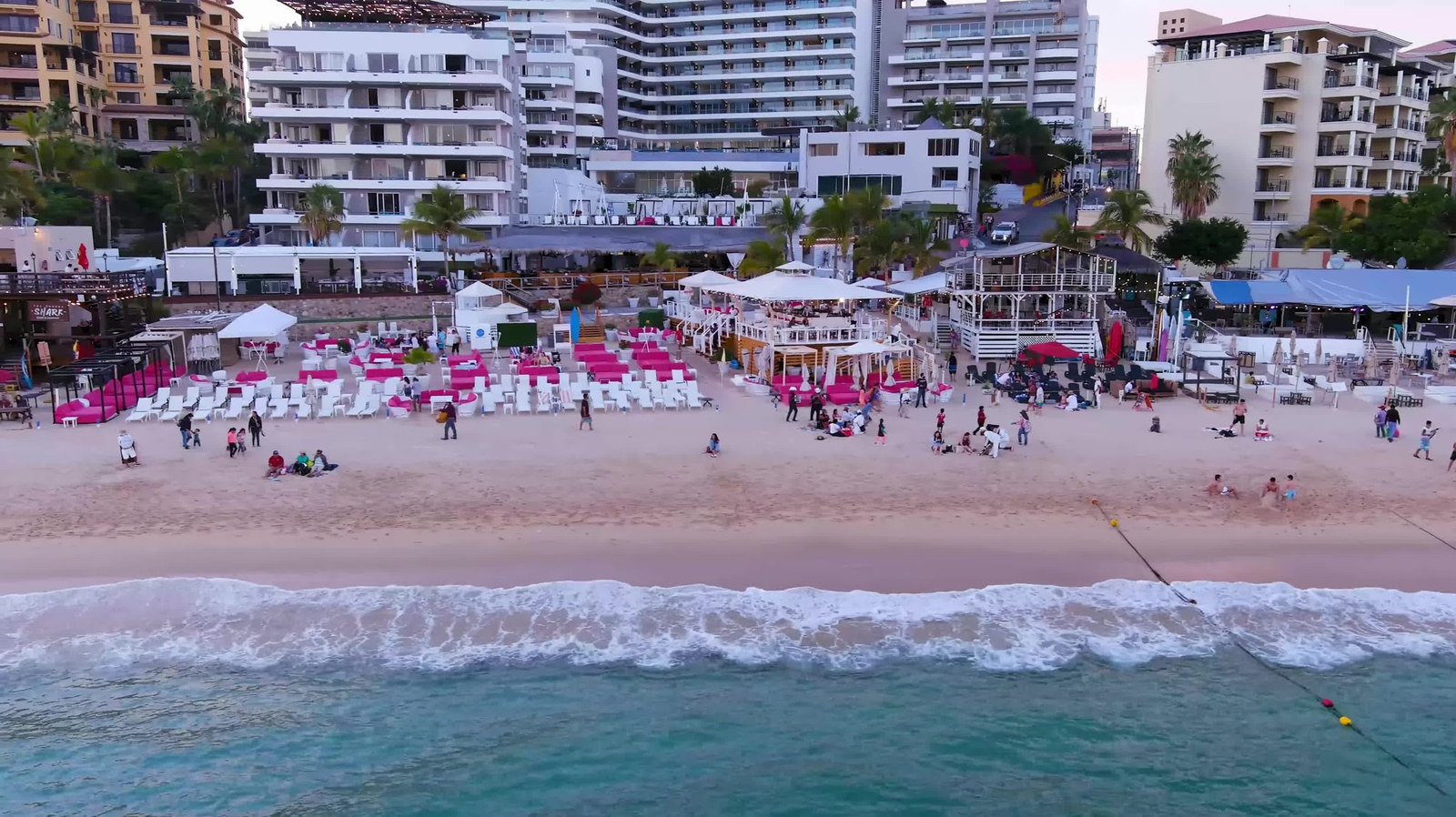
In June 2025, Los Cabos lost two American visitors to the sea in under three days. On the Tuesday, a woman of about 57 drowned at Playa Santa Maria on the Tourist Corridor while a long-period swell alert was active. Days earlier, a 71-year-old man from San Francisco was walking along the shoreline, not swimming, when swells knocked him over and pulled him into deeper water. A bystander who went in after him had to be rescued too.
He was walking. Every safety article tells you to respect the flags before you swim. Almost none tells you that on the Pacific side of this coast, the sea can take someone off the sand.
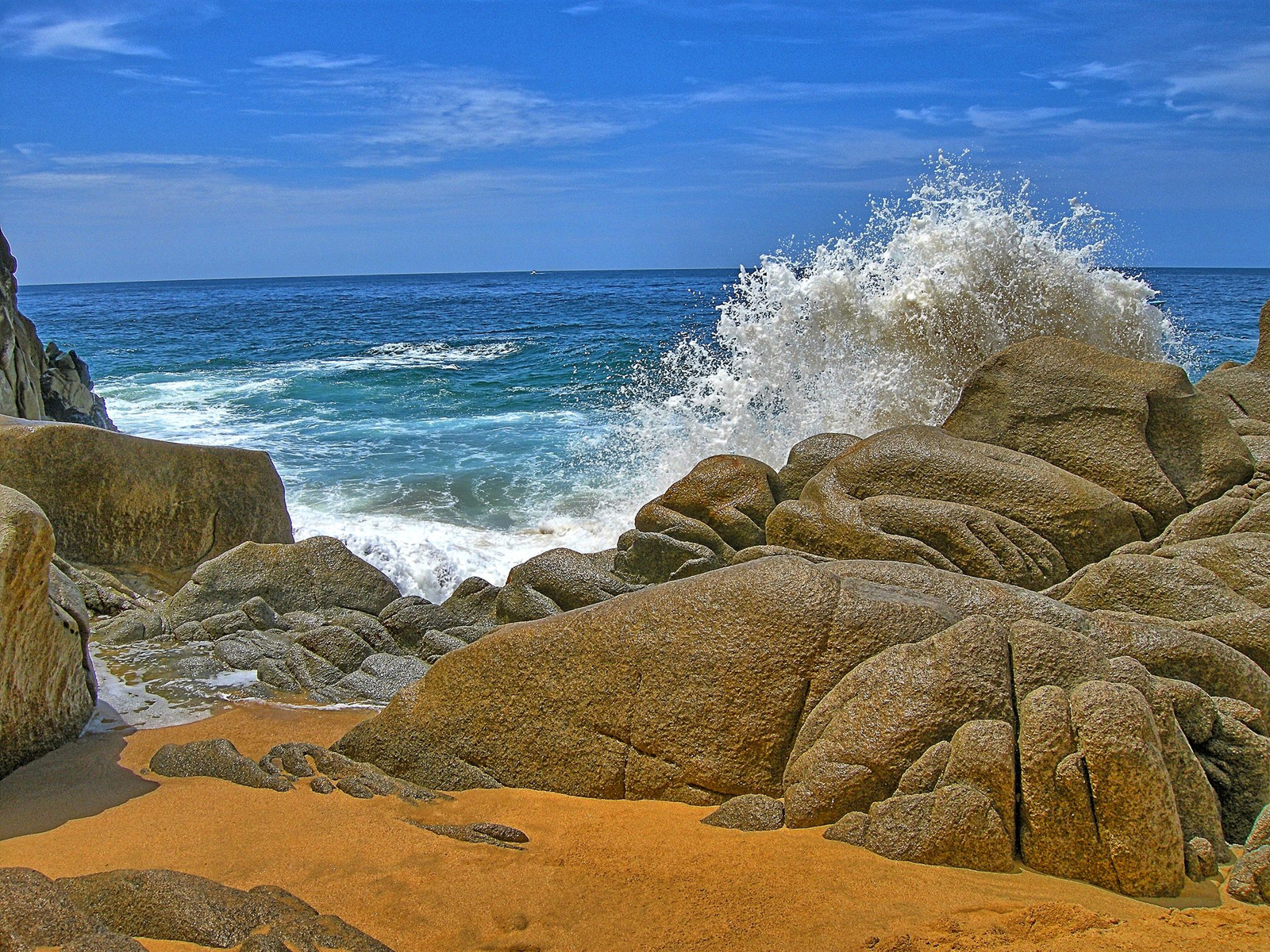
The mechanism has a name here: mar de fondo, long-period swell that arrives without the usual build-up. The water looks calm and then it is not. The director of municipal civil protection described the currents it creates as strong enough to drag a person far from shore within seconds. Los Cabos recorded mar de fondo alerts repeatedly through 2026, and on one April weekend more than twenty beaches raised the red flag, meaning a total ban on entering the sea.
Note how that sits against the other hazard on this coast. El Norte winds blow November to April and they are a wind problem that closes the port. Mar de fondo is a swell problem that closes the beaches, and it runs through the summer. Two different hazards, two different seasons, and the summer one is the one that drowns swimmers. We go through both in our guide to when to visit.
How many drown? Nobody counts.
We went looking for an annual drowning figure for Los Cabos and there is not one. Not from the municipality, not from the federal crime statistics agency, not from the national statistics institute, not from the Navy. No agency publishes it.
That absence is itself the finding, and it is why every article you read says the ocean is dangerous without ever saying how dangerous. What does exist is an operational record, and it is sobering enough:
- Up to ten water rescues a month on Cabo San Lucas beaches, per ZOFEMAT’s own coordinator, who put it at about two a week and sometimes more. His stated reason: people entering the water with the red flags already flying.
- Eleven to twenty rescues over Semana Santa 2026 alone, depending on which of four agencies you ask. They each count a different category and no reconciled figure exists.
- More than seven rescues across the 2026 spring break season, with more than fifty thousand students in town.
- Canada’s travel advisory is the only government document that says it plainly: “Several drownings occur each year.”
And the staffing, which is the number the other guides really should have found: ZOFEMAT runs about 22 lifeguards across 22 to 25 certified beaches, with an internal aspiration of 44. Five of them are at Medano, and those five are also responsible for Lover’s Beach, Divorce Beach, La Empacadora and Playa Pelicano.
Which changes the standard advice. “Look for a lifeguard” is not useful here. Assume there is not one, and if there is, treat it as a bonus.
The flags, and the eight beaches on the list
ZOFEMAT raises the flags daily. The colours are straightforward and the consequences are not advisory.
| Flag | What it means | What you do |
|---|---|---|
| Black | The beach is closed | Entry into the sea is prohibited outright |
| Red | Dangerous conditions | Bathing prohibited. This is the one people ignore. |
| Yellow | Dangerous but open | Entry permitted with extreme caution |
| Green | Conditions calm | Normal precautions |
A list of beaches officially named not suitable for swimming does exist, from a ZOFEMAT coordinator in 2023, and nobody republishes it: Mayan, Presidente, La Bocana, Costa Azul, El Tule, Dreams, Las Viudas and Playa del Amor, which is Lover’s Beach, the single most photographed stretch of sand in Cabo.
The list is three years old and not maintained, so treat it as a strong hint rather than a current legal document. What supports it is that the same names keep reappearing on red-flag notices year after year: Las Viudas, Santa Maria, El Tule, Costa Azul, Acapulquito.
One nuance worth keeping straight, because it trips people up. A beach can be certified, clean, beautiful and still lethal on a swell day. Santa Maria and Las Viudas appear on the environmental certification list and on the not-for-swimming list. Those certifications measure water quality and services. They do not measure whether the sea will take you.
What the US government says about the boats
We are a boat company, so you should discount what follows accordingly. We are quoting it anyway, because it is on a US government page and almost nobody reads that far down.
Under the heading for boating, the State Department’s Mexico advisory tells Americans, verbatim: “Boats used for excursions may not be covered by accident insurance” and “Boats may lack life jackets, radios and tools to make repairs.”
That is the US government saying a Mexican excursion boat may have no life jackets and no radio. It is not saying all of them, and it is not saying Cabo in particular. But it is the reason we ask operators about safety equipment, insurance and radio before we put anyone on a boat, and it is the honest argument for booking through somebody who checks rather than the man with the clipboard on the sand.
Which brings us to the water taxis. The fair price to the Arch is about 20 USD a head. Vendors on Medano routinely open at 40, 50 and sometimes 60. Agree the fare and the pickup time before you step on, photograph the boat, and do not pay in full until you are collected. A proper charter costs more and arrives with a licensed captain, which is the entire difference.
The risk nobody puts first, and the evidence says they should
Road traffic is the best-evidenced killer of American visitors to Mexico, and it is not close.
US government figures for 2019 to 2021 put motor vehicle crashes as the number one killer of healthy US citizens abroad, 402 deaths, with Mexico accounting for 141 of them, 35 percent of all US road deaths overseas. A peer-reviewed analysis of 15,549 US non-natural deaths abroad between 2002 and 2022 found vehicle accidents the largest single category at 29 percent, ahead of homicide at 21 percent and drowning at 13 percent.
Locally, Los Cabos recorded 49 deaths from traffic-related negligent homicide in 2025, and local fire services say road accidents are the most frequent emergency they attend, concentrated on the Transpeninsular highway between the two towns. For scale: over Semana Santa 2026 the municipality logged 17 vehicle accidents against eleven to twenty water rescues, and no deaths from either.
So if you want one piece of advice that is actually proportionate to the evidence: the dangerous part of your trip is probably the drive from the airport, and the second most dangerous part is the sea. Neither of those is what you were worried about.
| What could hurt you | How strong the evidence is | What it means for your trip |
|---|---|---|
| Road traffic | Strongest. 141 US deaths in Mexico over three years, 35 percent of US road deaths abroad. | The airport drive is the riskiest hour. Use a booked transfer, not a stranger. |
| The ocean | Two documented American deaths in three days, June 2025. Up to ten rescues a month. | Check the flag every single time. Assume no lifeguard. |
| Alcohol | Named by both the State Department and the CDC as a contributing factor. | It does not kill on its own. It turns the first two into fatalities. |
| Medical costs after an injury | Official. US Medicare does not pay, most hospitals refuse US insurance. | Travel insurance, and check it covers boats and water sports. |
| Crime against visitors | About 17 homicides a year across the whole municipality. No tourist-specific rate exists. | Real but small, and not the hazard most likely to touch you. |
| Scams and overcharging | Near universal in frequency, near zero in physical harm. | Agree every price before you commit. Especially water taxis. |
What we see when people book
Four things, every season.
People worry about the wrong hazard. We get asked about cartels roughly weekly. We have never once been asked about mar de fondo, which is the thing that has actually killed visitors here in living memory.
People treat a red flag as a strong suggestion. ZOFEMAT’s own coordinator named this as the reason for most of their rescues. The flag is not weather commentary. It means the sea will take you and there are twenty-two lifeguards for the whole municipality.
People book the cheapest boat on the beach. Sometimes that is fine. Sometimes it is a man with a panga, no radio and nobody expecting him back. The price difference between those two things is smaller than people assume.
People drink in the sun and then get in the water. Alcohol does not show up as a cause of death in any dataset we found. It shows up as the thing that turns the other three into fatalities, and both the State Department and the CDC name it specifically in their water-safety advice.
Common questions
Is Cabo San Lucas safe for tourists?
Broadly yes. Baja California Sur is at Level 2, exercise increased caution, the same as France and Germany, with no restrictions on US government employee travel. The municipality’s homicide rate of about 4 per 100,000 is comparable to Boston and well below Mexico’s national 18.1.
What is the biggest danger in Cabo?
Road traffic, then the ocean. Vehicle crashes are the best-documented killer of American visitors to Mexico, and long-period swell on the Pacific side has drowned visitors, including one who was walking on the sand rather than swimming.
Can you swim at the beaches in Cabo?
At some. Medano is the main swimmable beach in town, with lifeguards and a marked area. A 2023 municipal list named eight beaches as not suitable for swimming, including Lover’s Beach. Check the flag before you enter the water anywhere.
What do the beach flags mean in Cabo?
Black means the beach is closed and entry is prohibited. Red means bathing is prohibited. Yellow means dangerous but open with extreme caution. Green means calm. Blue Flag is an environmental certification, not a safety signal.
Is Cabo safer than Cancun?
On homicide rate, yes: about 4 per 100,000 against Cancun’s 6.9. Both states sit at Level 2, but the US advisory adds four extra cautionary sentences about Quintana Roo that it does not write about Baja California Sur.
Do I need travel insurance for Cabo?
Strongly advised. US Medicare and Medicaid do not pay in Mexico, most hospitals do not accept US insurance, private hospitals can require payment before discharge, and the State Department warns that excursion boats may not carry accident cover.
If you are getting on the water, ask us the awkward questions
Ask whether the boat carries life jackets for everyone aboard, whether it has a working radio, whether the operator is insured and whether the captain is licensed. Any broker worth using will answer all four without flinching, and ours is the shortest conversation of your trip.
Tell us your dates and your group and we will tell you what the sea is likely to be doing, which is the hazard we actually watch. How the booking works is straightforward, and nothing is owed for asking.


